
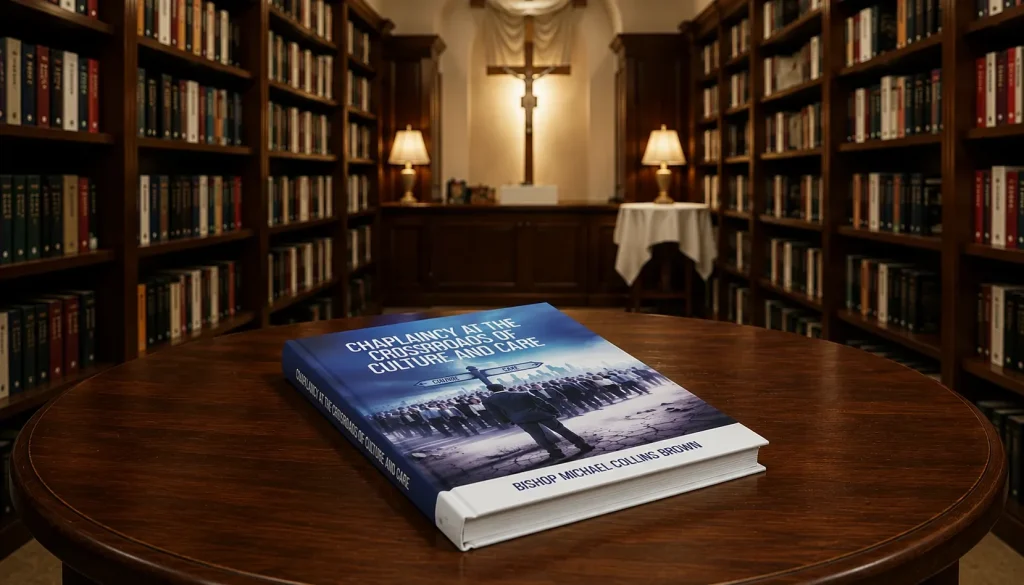
Some people find their calling early. Others walk into it step by step, and Bishop Michael Collins Brown is the second kind. For more than 35 years, he worked in churches, hospitals, and communities. Along the way, he saw pain up close. He sat with people in their hardest moments, and over time, he felt a pull to write it all down. As a result, that pull led to some of the most honest Christian books on cultural care and ministry being read today.
How a Hospital Hallway Led to Christian Books on Cultural Care and Ministry
Bishop Brown did not start out as a writer. Instead, he began as a pastor, and then he became a healthcare chaplain. It was that role that, more than any, changed his life.
Try to see it this way. A chaplain walks into rooms people do not want to go into, such as waiting for bad news or the end-of-life rooms. Bishop Brown went back to those rooms over and over again for decades.
He did not only experience pain, though. He would sit with them, pray with them, listen to them. Gradually, he started to notice some forms. For instance, he witnessed the way faith supported people in their healing, the role of culture in family processes when it came to mourning, and the different forms of care that were needed for those who needed it.
Eventually, he realized something was important. These stories had to be told, to no one in particular, but to anyone who may be going through the same difficult path. This is the way his writing career really started.
The Book at the Heart of This Journey: A Look Inside Chaplaincy at the Crossroads of Culture and Care
This book is not a textbook; it is not a lecture. Instead of that, it’s as if you’re sitting with a friend who’s seen a lot and wants to show you all the things he or she has seen.
The entire text of the book is filled with genuine scenes from hospital rooms, where Bishop Brown shares the experience with the reader. He speaks about faith, dignity and how to really care for someone. He also examines the impact of culture on illness, death and hope.
It’s here that readers of the healthcare chaplain journey book can discover something special. After all, the stories are real, and, therefore, feel real. There’s no need to make things up to sound dramatic, because that isn’t necessary.
What You Will Learn From This Book.
Let’s now take a closer look at the content of this book. Overall, I would remark the following:
What You Will Learn From This Book
Now, let’s break down what this book actually covers. Overall, here is what stands out most:
- What it means to give true spiritual guidance during terminal illness
- How faith and culture work together, not against each other
- Why presence matters more than perfect words
- How chaplains support both patients and their families
- What dignity looks like in someone’s final days
Importantly, each of these ideas comes from real experience. That is what makes the book feel different from most faith-based reading.
Why This Book Matters for Caregivers and Church Leaders
Of course, you do not need to be a chaplain to learn from this book. In fact, many readers are caregivers, while others are pastors or family members walking through something hard right now.
So, here is who tends to connect with this book the most:
- Family members caring for a loved one with a serious illness
- Pastors looking for real Christian leadership and chaplaincy insights
- Hospice and hospital staff who want to understand faith better
- Anyone offering comfort to dying patients and grieving families
- Readers who want religious support for patients and families explained simply
Ultimately, Bishop Brown wrote with all of these readers in mind. After all, he wanted the book to feel like a hand on the shoulder, not a sermon from a stage.
End-of-Life Care Through a Chaplain’s Eyes
Perhaps one of the most powerful parts of this book is how it talks about death, and not in a scary way, but in a human way.
Specifically, Bishop Brown offers end-of-life care from a chaplain perspective that many readers say they have never seen written down before. For instance, he talks about silence, presence, and what to say when there is nothing to say.
As a result, this part of the book often stays with readers the longest, since it gives language to something many of us feel but struggle to explain.
Why This Stands Out Among Faith-Based Books Today
Naturally, there are many faith books on shelves today, so what makes this one different?
In short, most books talk about faith in theory. By contrast, this book shows faith in action, inside real hospital rooms, with real people, facing real endings.
That kind of honesty is rare, and that is exactly why so many readers are drawn to it.
Final Thoughts
Altogether, Bishop Michael Collins Brown spent decades sitting with people during their hardest moments. He listened, prayed, and learned, and then he wrote it all down so others could learn too. Among Christian books on cultural care and ministry, this one stands out because it was lived first and written second. So if you care for others, lead a church, or simply want to understand faith and dying with more compassion, this book belongs on your shelf. In the end, it is honest, gentle, and deeply human.
Frequently Asked Questions
What makes this one of the best Christian books on cultural care and ministry?
It comes from real hospital experience, not theory. Since Bishop Brown spent over 35 years in ministry and healthcare, every story in the book is rooted in something he actually lived through.
Is this a good healthcare chaplain journey book for beginners?
Yes. Because the writing is simple and easy to follow, you do not need any background in theology or healthcare to understand and enjoy it.
Does the book cover spiritual guidance during terminal illness?
Yes, in great detail. Throughout the book, Bishop Brown shares how he supported patients and families during some of life’s hardest moments, with honesty and care.
Will pastors benefit from the Christian leadership and chaplaincy insights in this book?
Definitely. In fact, many pastors say the book helped them understand pastoral care in hospitals in a much deeper way.
Does this book offer religious support for patients and families?
Yes, and that is one of its main focuses. Overall, the book offers comfort, guidance, and real examples of faith in action during illness and loss.