
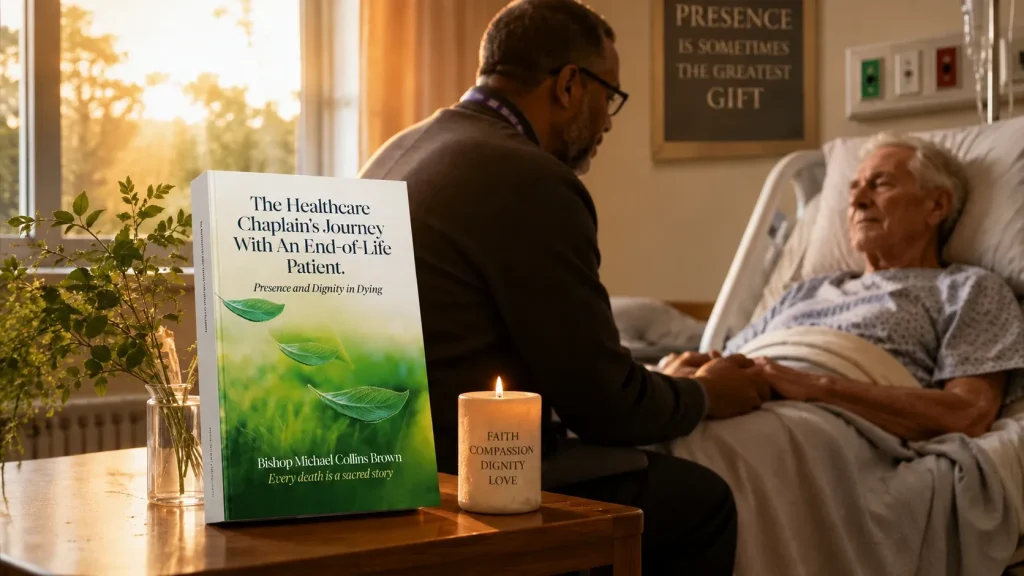
Some books come from research. Others come from years of sitting quietly at a bedside. This chaplain end-of-life care book belongs to the second kind. Bishop Michael Collins Brown wrote it after decades of walking alongside patients and families. So that experience shows on every page. It’s not a book built from theory. It’s built from real rooms, real silences, and real people. That’s part of why it feels so honest. Readers often say it doesn’t feel written. It feels remembered.
Why This Chaplain End-of-Life Care Book Feels Different
The Healthcare Chaplain’s Journey with an End-of-Life Patient follows one relationship. It’s between a chaplain and a dying patient. As a healthcare chaplain end-of-life patient book, it doesn’t lean on drama to hold your attention. The story unfolds slowly. It stays honest throughout. Instead of rushing toward comfort, it lingers in the discomfort first. That’s rare. It’s also part of what makes the book work so well.
Where the Book Begins
Here’s a small hint before the reveal. Picture a chaplain walking into a room. He’s entered rooms like it hundreds of times. Yet this visit still asks something new of him. That tension sits at the heart of this healthcare chaplain end-of-life patient book. Familiar work meets an unfamiliar person. Something shifts.
The book doesn’t offer easy answers. Instead, it shows what patience looks like. Sometimes there’s nothing left to fix. Only presence is left to give.
What Makes This One of the Notable Christian Pastoral Care Books
Among current Christian pastoral care books, this one stands out. It stays specific, not general. It doesn’t try to cover every question about suffering. Instead, it stays with one patient. One relationship. One slow unfolding of trust.
Bishop Brown’s other work touches similar ground. Chaplaincy at the Crossroads of Culture and Care looks at multicultural healthcare settings. Meanwhile, Are You a Refugee or a Citizen of the Kingdom leans further into being a Kingdom citizenship Christian book about identity and belonging. Together, these titles keep circling one idea. Presence matters more than perfect words. Readers who enjoy Christian pastoral care books that stay personal rather than academic tend to move easily between all three.
Spiritual Guidance During Terminal Illness, Told Honestly
Spiritual guidance during terminal illness rarely sounds like a sermon. It rarely sounds like scripture read aloud either. Bishop Brown seems to know that instinctively. Instead, his approach favors listening over speaking. It favors stillness over performance.
For example, one theme keeps returning. That theme is regret. So is reconciliation, even in someone’s final days. That’s not a comfortable topic. But it’s an honest one. Readers who’ve sat with a dying loved one will likely know it well, and many say his approach to spiritual guidance during terminal illness feels less like instruction and more like companionship.
Why Presence Matters More Than Words
Words often fail near the end of life. So chaplains learn to lean on something quieter. That something is presence. Simply staying in the room, without rushing to fix anything, can mean more than any sentence ever could.
Bishop Brown returns to this idea again and again. He shows how a held hand, or a shared silence, often says more than a well-practiced prayer. For readers new to chaplaincy, this might feel surprising. But for anyone who’s sat at a bedside, it likely feels familiar. So the book puts words to something many caregivers already sense, yet rarely see written down so plainly. It’s this quality that places it among the more quietly influential Christian chaplaincy books available today.
Christian Leadership and Chaplaincy Insights for Everyday Readers
You don’t need a hospital badge to benefit from Christian leadership and chaplaincy insights like these. Many of Bishop Brown’s lessons translate directly into everyday leadership, whether that’s leading a family, a team, or a small congregation.
Patience shows up constantly in his writing. So does humility, especially the kind that lets a leader sit with uncertainty instead of rushing to fix it. These aren’t flashy leadership lessons. Instead, they’re steady ones, drawn from decades of showing up for people during their hardest moments. Readers looking for practical Christian leadership and chaplaincy insights often find that the bedside lessons apply just as well in a boardroom or a living room.
This healthcare chaplain end-of-life patient book also offers something leadership books rarely do: a close look at what it costs to stay present when there’s nothing left to fix. That’s a leadership insight in its own right, even if it never uses the word leadership directly.
Who Tends to Pick Up This Book
Healthcare workers often find it first. It validates work that usually stays invisible. Caregivers pick it up too. Many are searching for words to describe what they’re seeing at home. Chaplains and faith leaders return to it as well, often placing it alongside other Christian pastoral care books they return to for guidance. They treat it less like a memoir. Instead, they treat it like a quiet companion for their own bedside visits.
So while it’s rooted in one man’s ministry, its reach goes well past any single job. Faith and healthcare integration books rarely manage that kind of crossover. Yet this one does. Readers drawn to Kingdom citizenship Christian book themes also tend to find their way here, since both explore what it means to hold steady when everything else feels uncertain.
Among current faith and healthcare integration books, few manage to stay this personal while still speaking to such a wide range of readers, from hospital chaplains to family caregivers to church leaders wanting sharper Christian leadership and chaplaincy insights for their own communities.
Frequently Asked Questions
What is this chaplain end-of-life care book about?
It follows one chaplain’s bond with a patient near the end of life. It focuses on presence, trust, and the quiet work of spiritual care.
Is this only for religious readers?
No. It’s written from a Christian view. But its focus on presence and dignity speaks to healthcare workers and caregivers of any background, which is part of why it’s often recommended alongside other faith and healthcare integration books.
How does it compare to other Christian chaplaincy books?
It stays narrower and more personal than most. Instead of broad teaching, it follows one relationship. That gives it a close, grounded feel that many Christian chaplaincy books and Christian pastoral care books aim for but rarely achieve.
Who is Bishop Michael Collins Brown?
He’s a healthcare chaplain and author with over 35 years in ministry. He now serves as NHS and Military Chaplaincy Lead for the Apostolic Pastoral Congress UK.
Conclusion
Bishop Michael Collins Brown didn’t write this book for neat conclusions about death. Instead, he wrote it to honor quiet, unseen work. That’s the work chaplains do every day. So if you’re looking for a chaplain end-of-life care book that treats grief with honesty, this one is worth your time. Consider picking up a copy. Let Bishop Brown’s years of bedside presence and his broader Christian leadership and chaplaincy insights speak into your own understanding of care.