
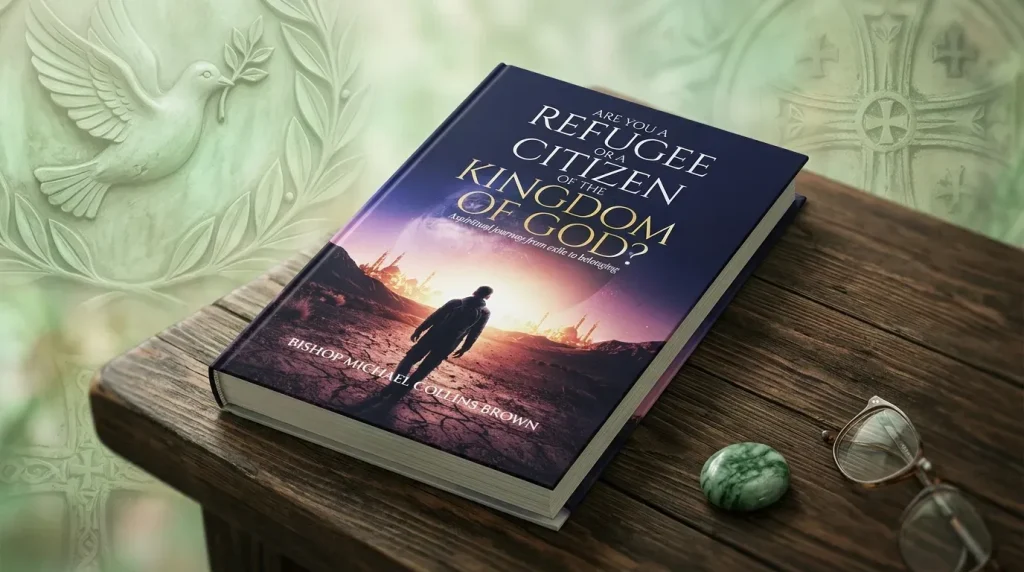
There are questions that settle on you slowly. You do not always know they are forming until one day you find yourself unable to avoid them. For many believers, the question at the heart of Are You a Refugee or a Citizen of the Kingdom by Bishop Michael Collins Brown is exactly that kind. It is not a question designed to make you feel inadequate. It is a question designed to set you free.
What Are You: a Refugee or a Citizen of the Kingdom? Is Really Asking
Bishop Michael Collins Brown has spent over 35 years in ministry. He was born in Ghana, built his calling across continents, and has served for years as an NHS and Military Chaplaincy Lead in the United Kingdom. He has sat at more bedsides than most people will ever visit, held more hands in final hours than he could count, and listened to more stories of fear, uncertainty, and spiritual longing than any single book could contain. What he has learned from all of that is deceptively simple: most people are living as refugees in a Kingdom they already belong to.
That is the premise of this book, and it is a premise worth sitting with. Not because it is complicated, but because the implications of it reach into every corner of how a person of faith moves through the world.
Identity Before Circumstance
One of the things that makes this a standout Kingdom citizenship Christian book is that it does not begin with theology in the abstract. It begins with experience, with the feeling of displacement, of not quite belonging, of living on the edges of a faith you have professed but perhaps never fully inhabited. Bishop Brown understands that feeling because he has encountered it in hospital rooms, in community halls, in the quiet conversations that happen when people finally drop the performance of certainty and admit they are not sure where they stand with God.
As a Kingdom citizenship Christian book, this work does something rare. It takes the concept of Kingdom identity and grounds it in the kind of language that a person sitting in genuine spiritual uncertainty can actually receive. There is no condescension here. There is only the steady, compassionate voice of someone who has spent decades helping people find solid ground.
What Belonging Actually Costs
Bishop Brown does not promise that claiming your citizenship in the Kingdom of God will make your life easier. He is far too honest for that. What he offers instead is something more durable: the clarity that comes from knowing who you are, regardless of what your circumstances say about you. For readers exploring faith and healthcare integration books, this is a particularly valuable frame. In healthcare settings, identity questions become urgent in ways they never do in ordinary life.
A person facing serious illness or the end of their own life does not have the luxury of postponing the question of where they belong. Bishop Brown writes for that person, too, and his writing is better for it. Among faith and healthcare integration books that address spiritual identity, this one is unusually grounded in the reality of what people actually face.
The Chaplain Behind the Pages
It would be a mistake to read this book without understanding the professional context from which it was written. Bishop Brown is not a theologian writing from a library. He is a working healthcare chaplain who has provided spiritual care for terminal patients at some of the most vulnerable moments a human being can experience. That background shapes every page of this book. The gentleness is earned. The directness is earned. Even the theological certainty is earned, not through academic study alone but through the particular education that comes from sitting with someone who is dying and discovering that the questions you thought were settled are suddenly very alive again.
Providing spiritual care for terminal patients teaches a chaplain something that no seminary course fully prepares you for: that people do not need more information at the end of life. They need presence, identity, and the quiet confidence that they belong somewhere that death cannot reach. That is what this book tries to give its readers long before they ever reach that moment.
“This is not a book about theology in the abstract. It is a book about what it feels like to live as though you do not belong in the very Kingdom that has already claimed you.”
A Book Rooted in Real Chaplaincy
For anyone who has sought an end-of-life spiritual care book that goes beyond clinical frameworks and speaks to the deeper questions of identity and belonging, this is the book that fills that gap. Bishop Brown draws on decades of pastoral and chaplaincy experience to write about spiritual security in a way that is practical, honest, and deeply human. As an end-of-life spiritual care book, it is unusual in that it does not wait until the final chapter to address the hardest questions. It begins there and works outward, which is exactly how a good chaplain approaches a room.
For Readers Seeking Something Grounded
The value of reading from someone who has offered end-of-life care from a chaplain perspective is that you get insight shaped by presence rather than theory. Bishop Brown has been in those rooms. He has heard what people say when the pretense drops away and the real questions surface. His writing carries the authority of that experience without ever becoming clinical or detached. For readers who want end-of-life care from a chaplain perspective woven into a broader conversation about faith and identity, this book delivers both with equal care.
Conclusion
The title of this book is a question, and that is entirely intentional. Are You a Refugee or a Citizen of the Kingdom does not tell you who you are. It invites you to find out. Bishop Michael Collins Brown has written a book that is equal parts pastoral care and spiritual challenge, rooted in decades of chaplaincy experience and shaped by a genuine concern for the reader’s well-being, not just their doctrine. If you have ever felt on the outside of a faith you claim, or uncertain of your standing before God, this is the book that was written for that exact feeling.
FAQ’S
What is Are You a Refugee or a Citizen of the Kingdom about?
It is a Christian identity book by Bishop Michael Collins Brown exploring the shift from spiritual refugee (uncertainty and displacement) to confident Kingdom citizens with purpose and belonging.
Who is this book written for?
It is written for believers wrestling with spiritual identity, belonging, or purpose—especially during uncertainty, loss, transitions, or those in healthcare and chaplaincy.
Is this book only for Christians?
Rooted in Christian theology, its themes of belonging and purpose offer value to readers from various faiths or those exploring faith for the first time.
Where can I learn more about Bishop Michael Collins Brown?
Visit bishopmcbrown.com for his books, blog, and speaking engagements on faith, chaplaincy, healthcare, and Kingdom identity.