
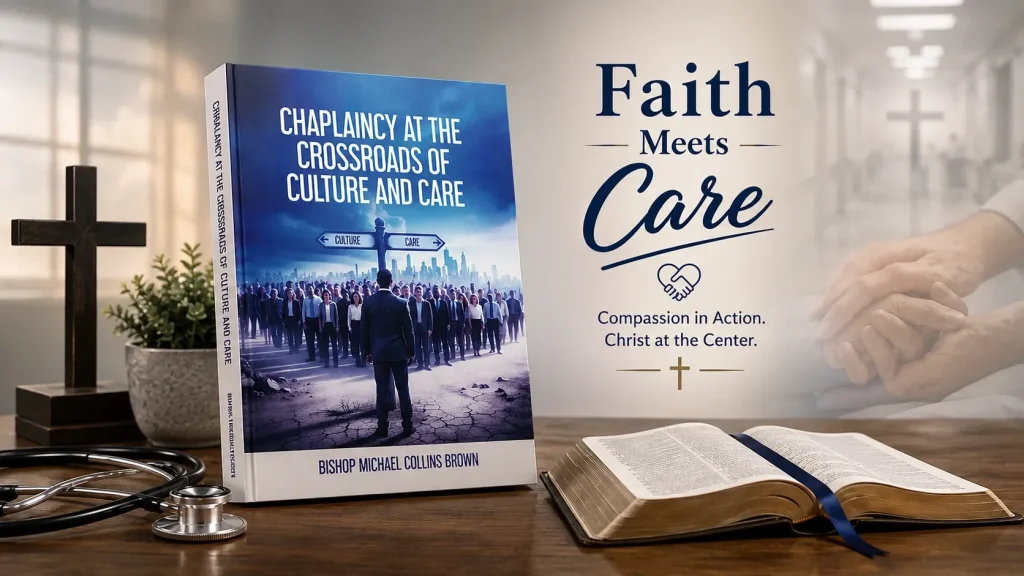
Some books grow out of hard years. So these faith and healthcare integration books come from exactly that kind of place. Bishop Michael Collins Brown wrote them after decades in hospital rooms. He sat with people at their most fragile moments. That’s not an easy place to start. Yet it’s honest. And honesty tends to make better books.
Why These Faith and Healthcare Integration Books Feel So Grounded
Most books about faith and medicine stay vague. They talk about belief in general terms. Or they talk about healing in broad strokes. So Bishop Brown’s work does something different. Instead of staying general, it stays close. It stays rooted in real rooms and real people.
The Healthcare Chaplain’s Journey with an End-of-Life Patient follows one bond closely. As an end-of-life spiritual care book, it’s between a chaplain and a dying patient. The story moves slowly. It doesn’t rush toward comfort. Instead, it sits with pain first. That choice sets it apart from a lot of similar books.
A Calling Shaped by Distance and Service
Bishop Brown wasn’t raised inside hospitals. Instead, he was born in Ghana. That’s far from the systems he’d later serve. Early on, though, he felt a steady pull. He wanted to help others. So that pull carried him across borders. It brought him into the UK. There, ministry and healthcare chaplaincy became his life’s work.
He didn’t have one defining mentor. Instead, years of quiet ministry taught him slowly. He learned one bedside visit at a time. Also, over 35 years, he’s served as NHS and Military Chaplaincy Lead for the Apostolic Pastoral Congress UK. That role asks for both depth and steadiness. So by the time he began writing, he wasn’t guessing about chaplaincy and healthcare ministry. He was simply describing what he’d already lived.
Chaplaincy and Healthcare Ministry as a Daily Practice
Chaplaincy and healthcare ministry rarely looks dramatic. Mostly, it’s quiet work. It’s sitting. It’s listening. It’s staying present when there’s nothing left to fix. So Bishop Brown’s writing captures that quiet without dressing it up.
Also, his other titles carry this same practice into new settings. Chaplaincy at the Crossroads of Culture and Care looks at multicultural healthcare spaces. Meanwhile, his broader message keeps returning to one idea. Presence matters more than perfect words. That’s true no matter which room you’re standing in. Even his newer work, which reads more like a Kingdom citizenship Christian book than a hospital memoir, circles back to that same steady presence.
Spiritual Guidance During Terminal Illness, Without the Easy Answers
Spiritual guidance during terminal illness rarely sounds like a sermon. Bishop Brown seems to know that well. Instead of speaking at people, he writes about listening to them. So his approach favors stillness over performance. It favors presence over persuasion.
Plus, the book doesn’t skip past cultural differences in how people face death. Grief looks different across families and beliefs. So instead of treating grief as one single thing, Bishop Brown treats each difference with real respect. That’s part of what makes his approach to spiritual guidance during terminal illness feel earned rather than borrowed from a textbook.
Why Faith-Based Healthcare Support Looks Different in Practice
Faith-based healthcare support often gets reduced to prayer alone. But Bishop Brown’s version looks quieter than that. Sometimes it’s just staying in the room. Other times, it’s holding a hand. No words are needed at all.
He returns to this idea often. A shared silence, he suggests, can say more than a well-rehearsed prayer. For readers new to chaplaincy, that might sound surprising. But for anyone who’s sat at a bedside, it likely feels familiar right away. So his writing puts words to something many caregivers already feel but rarely say out loud. It’s a quieter model of faith-based healthcare support than most readers expect going in.
Christian Leadership and Chaplaincy Insights for Everyday Readers
You don’t need a healthcare job to use Christian leadership and chaplaincy insights like these. Many lessons here translate into everyday leadership. That’s true whether you lead a family, a team, or a church.
For instance, patience shows up again and again in his writing. It’s not passive, though. It’s active, almost like a discipline. So is humility, especially the kind that lets a leader sit with doubt instead of rushing to fix it. These aren’t flashy lessons. Instead, they’re steady ones. They come from decades of showing up for people during hard moments. Readers looking for practical Christian leadership and chaplaincy insights often say these bedside lessons apply just as well outside a hospital.
So while end-of-life care from a chaplain perspective sits at the center of his best-known book, the leadership lessons underneath stretch much further. That’s likely why his work reaches readers who’ve never worked in chaplaincy at all. His other title, closer to a Kingdom citizenship Christian book in tone, extends that same reach into questions of identity and belonging.
Where His Other Books Fit In
Readers who start with his end-of-life spiritual care book often go looking for more. Are You a Refugee or a Citizen of the Kingdom, his Kingdom citizenship Christian book, picks up a related thread, asking not how we face death, but how we understand who we are along the way. Together, his titles form less of a series and more of a slow, ongoing conversation about presence, identity, and care.
His approach to chaplaincy and healthcare ministry threads through every one of them, whether the setting is a hospital room, a church pew, or a quiet moment alone with a hard question. That consistency is part of why readers tend to trust him with difficult topics in the first place.
Frequently Asked Questions
What makes these faith and healthcare integration books different from other spiritual writing?
They’re grounded in real chaplaincy work rather than general theology. They focus on presence, dignity, and honest human connection during illness.
Is this only useful for healthcare workers?
No. Healthcare workers often connect with it first. But caregivers, faith leaders, and anyone facing loss will likely find it just as useful, especially readers drawn to spiritual guidance during terminal illness in their own families.
How does the book handle cultural differences around death?
It treats them with respect instead of treating grief as one thing. This comes from Bishop Brown’s work across many communities and his years in chaplaincy and healthcare ministry.
Who is Bishop Michael Collins Brown?
He’s a healthcare chaplain and author with over 35 years in ministry. He now serves as NHS and Military Chaplaincy Lead for the Apostolic Pastoral Congress UK.
Conclusion
Bishop Michael Collins Brown didn’t set out to write theory about faith and medicine. Instead, he set out to describe what he’d actually seen, one bedside at a time. So if you’re searching for faith and healthcare integration books that treat both subjects with equal honesty, his work is a solid place to start. Whether you begin with his end-of-life spiritual care book or his Kingdom citizenship Christian book, you’ll find the same steady voice underneath. Consider picking up a copy. Let decades of quiet presence and real faith-based healthcare support guide your own understanding of care.